Helical Pile Foundation Installation
A Versatile, High-Capacity Solution for Foundation Repair and Stabilization
Not every foundation repair situation calls for the same solution. Soil conditions vary, foundation designs differ, and the scope of settlement and structural distress can range from targeted to widespread. For homeowners and property owners who need a high-capacity, engineered foundation repair solution with the versatility to handle a wide range of conditions, residential helical piles are one of the most effective options available.
Hygema House & Building Movers is an exclusive installer for Magnum Piering — an industry-leading manufacturer of high-capacity steel piering and underpinning systems. Our team of foundation repair professionals uses Magnum helical piles and helical anchors to lift and stabilize residential and commercial foundations throughout Middleburg, FL, and the greater Clay County region.
Every helical pile project begins with close collaboration with registered professional engineers to determine which steel piering system is best suited to your structure's foundation design and the specific soil composition beneath it. The result is a repair plan that is engineered for your project — not adapted from a generic template.
What Are Helical Piles, and How Do They Work?
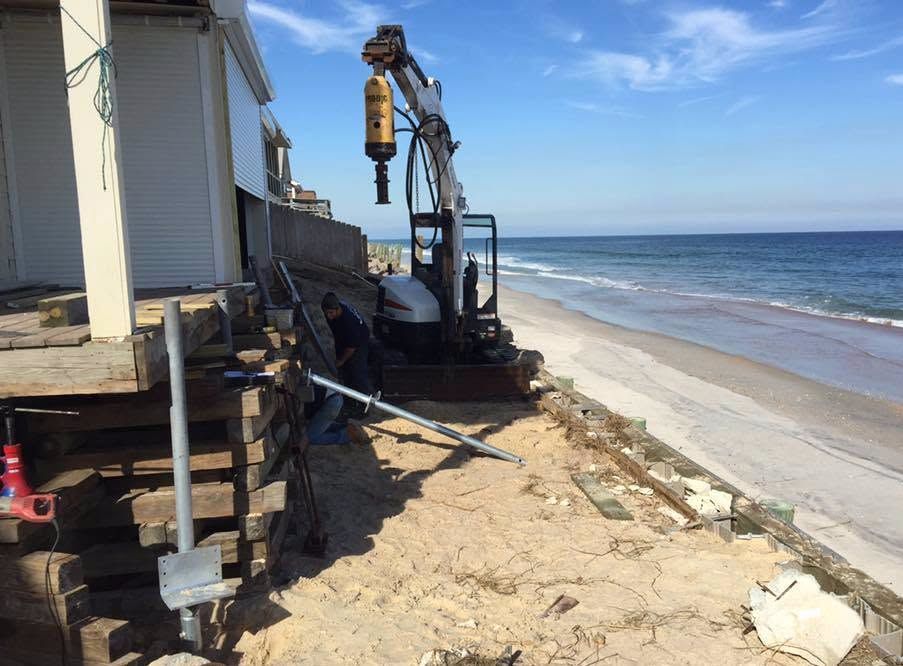
A helical pile — also called a helical pier or screw pile — is a steel shaft with one or more helical bearing plates welded to it. The pile is advanced into the ground using a hydraulic torque motor, rotating into the soil much like a screw into wood. As it turns, the helical plates cut through the soil and draw the shaft downward until it reaches a soil layer capable of bearing the required structural load.
Once the pile is installed to the appropriate depth and torque, the structural load of the foundation is transferred to the bearing plates seated in the stable soil. For settling foundations, multiple helical piles are installed at strategic locations and then used to lift the structure back toward its original elevation — closing cracks, realigning doors and windows, and restoring level floors throughout the home.
Helical piles work in both compression and tension applications. In compression, they carry downward structural loads — the weight of the building pressing onto the soil. In tension or uplift applications, they resist forces pulling upward on a structure, such as hydrostatic pressure or wind uplift. This dual capability makes helical piles one of the most versatile foundation systems in use today.
What Results Can Homeowners Expect From Helical Pile Foundation Repair?
For homeowners throughout the Middleburg and Clay County area dealing with foundation settlement, the visible effects of a successful helical pile repair are often immediately noticeable. On the majority of foundation stabilization projects, the following improvements occur:
- Doors and windows that previously stuck or jammed open and close normally again
- Cracks in interior and exterior walls close sufficiently to become repairable with standard patching
- Floors that had settled or sloped return to a level, stable surface
- Furniture that had been sitting unevenly due to sloped floors sits level once more
- Gaps between walls, ceilings, and floors close as the structure is lifted toward its original position
- The ongoing progression of settlement damage is permanently halted
The extent of improvement depends on how long settlement has been occurring and the current condition of the structure. During the inspection and planning phase, our team and the engineers we work with set realistic, honest expectations for what the repair will achieve in your specific situation.
Magnum Round Shaft Helical Pile Product Line: Capacities for Every Project
Magnum offers a superior round shaft helical pile product line with load capacities ranging from 16 tons to 200 tons — covering the full spectrum of residential and commercial foundation requirements. The three primary shaft sizes available through Hygema are:
- 3" O.D. Shaft: Four products ranging from 16-ton to 50-ton ultimate capacity. This product line features the single-bolt connection for efficient installation and is well-suited for light to moderate residential foundation applications.
- 4.5" O.D. Shaft: Four products ranging from 70-ton to 97-ton ultimate capacity. This mid-range product line handles heavier residential loads and a broad range of commercial underpinning applications.
- 5.72" O.D. Shaft: Six products ranging from 92-ton to 200-ton ultimate capacity. This heavy-duty product line addresses the highest-load commercial and industrial foundation applications, as well as complex multi-story residential structures.
Selecting the correct pile size and configuration for your project requires a thorough understanding of your structure's load requirements and the bearing capacity of the soil at the installation depth. Hygema works directly with registered professional engineers to make that determination accurately on every project.
Common Questions About Residential Helical Pile Installation
What kind of soil are helical piles designed for?
Helical piles work best in sandy, loose, or otherwise weak surface soils -- exactly the conditions common across Northeast Florida and Clay County. The helical plates are driven through poor soil until they engage a competent bearing layer below. Installation torque readings confirm when that layer is reached, so the depth is determined by actual soil conditions, not a preset number.
How long does helical pile installation take on a residential property?
Most residential helical pile installations are completed in one to two days depending on the number of piles required and site conditions. The work is minimally invasive -- no large excavation is needed. Your home remains occupied during the process in most cases, and landscaping disruption is kept to a minimum.
How much weight can a helical pile support?
Load capacity depends on pile diameter, helix configuration, and the bearing strength of the soil layer reached. Residential helical piles installed through Magnum Piering-certified systems are engineered to defined load specifications for each project. Hygema provides installation documentation that confirms the torque-verified depth and corresponding capacity for each pile installed.
What is the difference between helical piles and steel push piers?
Both systems transfer a foundation's load to deep, stable soil -- but the method differs. Push piers are hydraulically driven straight down using the building's own weight as resistance, making them ideal for existing settled foundations. Helical piles are screwed into the ground using torque, making them suitable for both new construction support and repairs where poor access prevents hydraulic driving.
Does my homeowner's insurance cover helical pile foundation repair?
Coverage varies by policy and the cause of the damage. Foundation settlement from soil movement is often excluded from standard homeowners policies, while damage caused by a sudden covered event may qualify. Hygema provides detailed written documentation of the problem and the repair scope -- useful when submitting a claim or requesting a policy review with your insurer.

